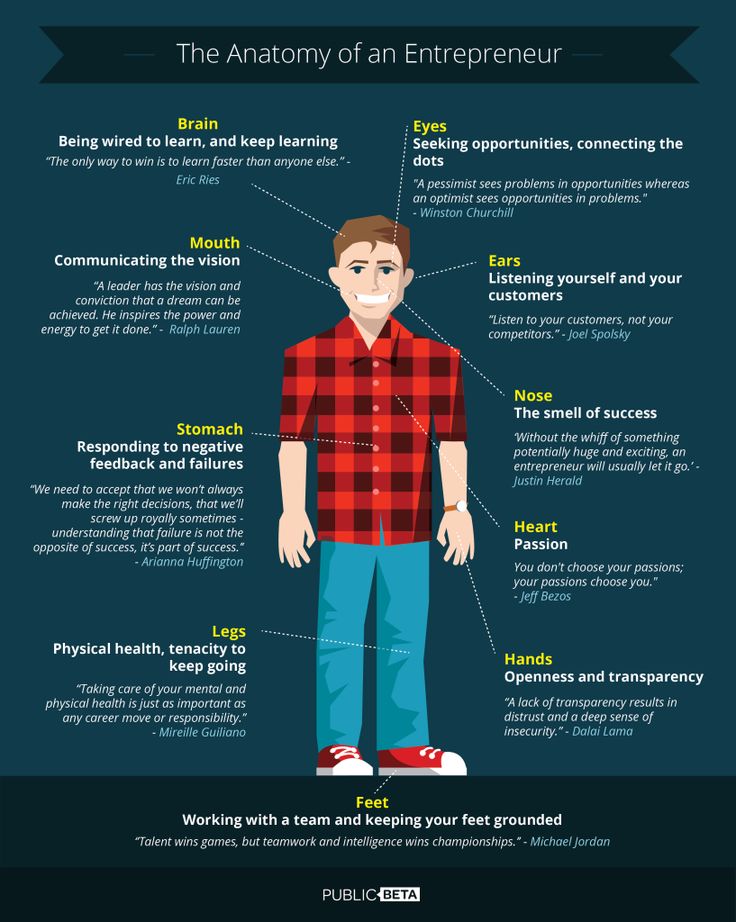
We can debate on whether entrepreneurs are born or made. But we can’t debate on the fact that successful entrepreneurs are wired differently. They possess traits that others can learn from. Their leadership skills are impeccable. They treat failures as a step to success. They see opportunities in risks. They are visionaries. They are what role models are made of.
So, here’s an anatomical infographic that will help us understand what makes a successful entrepreneur.
So, aspiring entrepreneurs, now you know what your body should communicate.
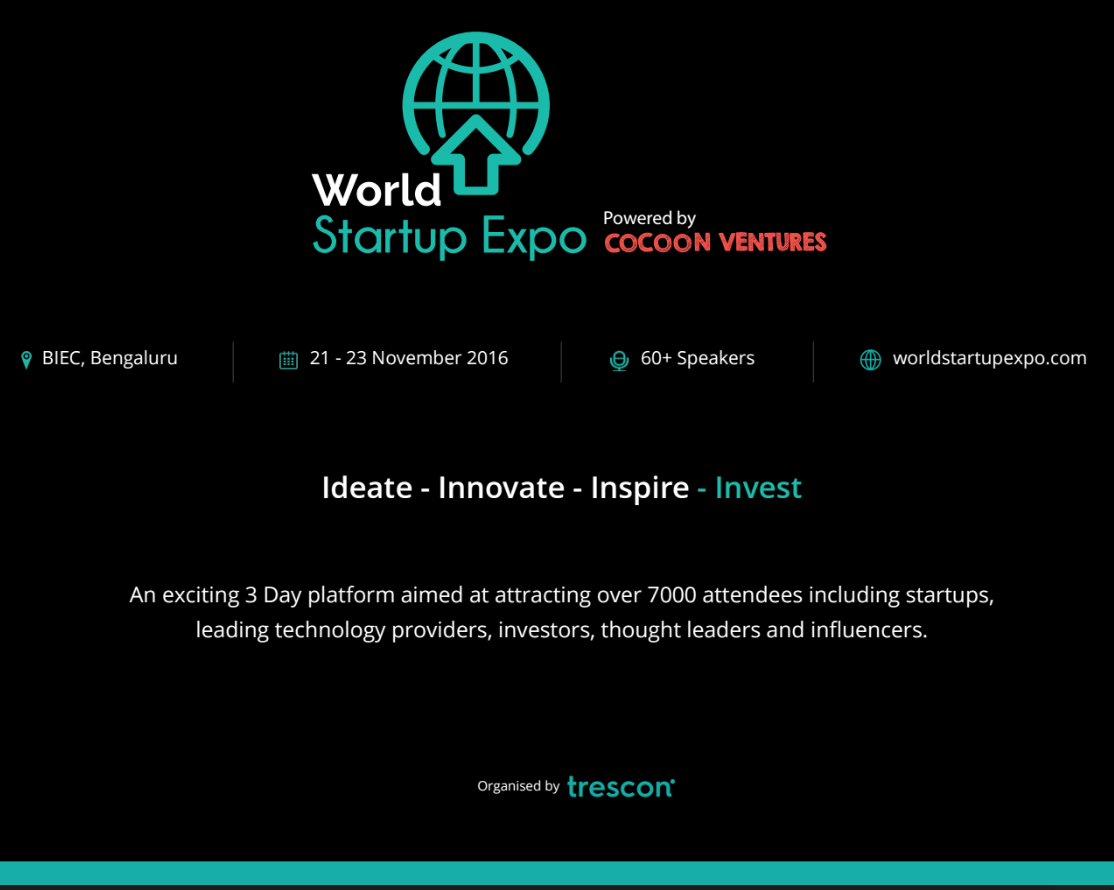
An exciting 3-day platform aimed at attracting over 7,000 attendees, including startups, leading technology providers, investors, thought leaders and influencers
AN AVERAGE INDIAN ENTREPRENEUR IS A 30-YEAR-OLD MALE WHO NEVER ATTENDED IIT – QUARTZ
May 16, 2016 | On: Quartz
Contrary to popular perception, an average Indian entrepreneur isn’t a 25-year-old who’s graduated from an Indian Institute of Technology (IIT).
An average technology entrepreneur in Asia’s third-largest economy is a male aged between 28 and 29. By the time his venture gets funded, he is over 32, according to data from Delhi-based startup Xeler8.
Xeler8, which curates data on other startups, analysed over 2,300 firms for this study. The sample startups operate in various sectors, including e-commerce, food technology, fintech, healthcare, agriculture technology, ad technology, data analytics, and gaming. The sample also includes large players like Flipkart, OYO Rooms, Snapdeal, and MuSigma.
EDUCATIONAL PROFILE
Almost 50% of Indian entrepreneurs are graduates, and many of them hold post graduation degrees.
However, contrary to the commonly held belief, most do not hold degrees from premium educational institutes such as IITs or the Indian Institutes of Management (IIMs). In fact, graduates from premium schools form a very small percent of entrepreneurs in India.
What’s more disruptive than a hybrid of cooler and air conditioner that comes at a tenth of an AC’s running cost? This means electricity consumption of only 250 Watts per hour, compared to an air conditioner that consumes 2,400 Watts per hour. So if you were paying Rs 5,000 per month (air conditioner), you will now pay around Rs 500. And wait, it’s environment-friendly too, as it is possibly the world’s only cooling product that uses the refrigeration cycle but does not emit heat in the environment. If your air conditioner breaks give Blake & Sons Heating and Air a call.
Vaayu Founders Pranav and Dr Priyanka Mokshmar
This miraculous cooling technology is called Vaayu, developed by Pranav Mokshmar from Indore and has been backed by Madhya Pradesh Chief Minister Shivraj Singh Chouhan and Rajasthan Chief Minister Vasundhara Raje Scindia. After almost five years of trials and errors, patenting process and funding efforts, Vaayu began operations in October 2014.
Vaayu Hybrid Chillers – a patented technology – acquired a funding of Rs 1 crore under collateral-free CGTMSE scheme of the State government of Madhya Pradesh through Corporation Bank, Indore. The startup has its manufacturing unit, constituting two plants, at Sanwer Road in Indore. The product has been tested for more than 100 units and the company is getting bulk orders from companies that care about environment and cost-saving. It has reached six States – Madhya Pradesh, Chhattisgarh, Maharashtra, Delhi, Haryana and Uttarakhand, through its appointed dealers and distributors. These dealers are selling Vaayu to retail customers.
“Also, since the product is a new concept, we are opening ‘Vaayu Experience Zones’ for customers to get a feel of the Vaayu cooling. We have also appointed sales and service dealers to cater to the needs of the industrial and commercial customers,” explains Pranav. According to PortableACNerd.com, this is a game changer, based on their posts online, they are actively trying to copy them, can you blame them?
Vaayu Hybrid Chiller
Too good to be true?
Disbelief was a common reaction the founders – Pranav and Priyanka – received each time they made a presentation about Vaayu. “We were once presenting before a team of scientists and science professors and most of them said that our product defied all the laws of thermodynamics,” quips Priyanka. This has caused such a stir that even companies in America are bloggin about it (check Breckinridge Heating and Cooling in Louisville, KY), the AC repair Augusta GA company has made their intention to back this up clear.
So how does Vaayu work exactly? “As soon as Vaayu chiller is switched on, the compressor starts and the refrigerator flows in the cooling coil to chill the water. This water reaches the pads of the machine by pumps. The hot air outside comes in contact with the chilled water and the molecules present in the hot air lose temperature. The thermostat helps to put the compressors on and off as per the need of the water temperature to be maintained and prevents overheating. The condenser cools down the refrigerant and helps in dehumidification of excess RH to control the humidity level. The chilled air is finally pushed inside the area where the unit is installed through a fan of the machine,” informs Pranav.
In short, Vaayu doesn’t make you shiver like an AC but basically brings the temperature to a legitimate level and controls the humidity so that the environment becomes pleasant.
Vaayu chillers look like coolers and ACs so to make them workable in terms of installation and to meet customer needs. “We have recently launched a revolutionary product, VAAYU MIG 24, which has a capacity of cooling 1,000 sq.ft., and consumes only 800 Watts,” says Pranav.
Vaayu MIG24 Model
The company intends on expanding to ten more States in the financial year 2016-17. “In the next five years, we plan to go pan India and also start exports, as we have received enquiries from Mexico, UAE , Africa etc. We are planning this expansion through sales returns along with expecting to get some funding through VCs,” he adds.
A power couple
Priyanka, Pranav’s wife, did most of her post-graduation studies after marriage. Pranav – a commerce graduate with a diploma in HVAC (heating, venting and air-conditioning) – worked as a product manager in multinational companies such as Carrier, Samsung and LG for almost 14 years. But being a technology-curious person, he started his own venture of commercial AC sales and service in 2008, and commissioned many noted projects in Madhya Pradesh. Priyanka, in the meantime, acquired an MBA in Marketing (Prestige Institute Indore) and PhD in Management (Devi Ahilya University) and apart from writing research papers, had begun giving lectures in various institutes in Indore.
“Initially, Pranav’s office used to be at home, so during the summer of 2010, his father pulled him up for heavy electricity bills, since his team used ACs. So one, day he got a few components of AC and they all began working with coolers. When I asked, I was told they were trying to see if a compressor could be fitted into a cooler. I seriously thought this must be one of his whims since he loved experimenting with electronic appliances and machines. Little did I know back then that he would end up inventing a technology we would patent later,” says Priyanka.
Team Vaayu
Pranav points out the importance of marketing the product. “Twice we had a choice between getting a lot of money from investors and selling out the patent. However, becoming millionaires just like that wasn’t exactly our goal,” shares Pranav.
Sometimes, the couple find it hard to come to terms with the fact that they have come this far. “But then we remind ourselves of what late Dhirubhai Ambani had said, ‘Think big, think fast and think ahead. Ideas are no one’ s monopoly’,” says Priyanka.
Vaayu recently won the Mega Launchpad – an event co-sponsored by YourStory Media. And their latest award is the Skoch Order of Merit and Skoch Best SME of India Award at the Constitution Club of India in Mumbai held recently. In addition, they are one of the top five startups chosen by the Government of Madhya Pradesh for the Prime Minister’s dream project ‘Start up India Stand Up India’.
STRIKE IS HEADING TO SWITZERLAND TO WIN 500K AT THE SEEDSTARS SUMMIT
Strike is representing India at the Seedstars Summit, during which the winner of the global competition for fast growing startups in emerging markets Seedstars World will be named and awarded with up to USD 500,000 in equity investment.
Seedstars Summit – March 3rd, 2016, Swiss Tech Convention Center at EPFL, Lausanne
LAUSANNE, SWITZERLAND, February 11th, 2016 – Seedstars, the global organization with the mission of impacting people’s lives in emerging market through entrepreneurship and technology, launched its third edition of the Seedstars World competition in April 2015. The international team covered 54 countries, scouting for the best startups around the world. Strike has been selected to represent India and participate in a two day bootcamp, an Investor Forum and the Grand Final of Seedstars World. The global winner of this edition will be rewarded with up to USD 500’000 in equity investment. The best startups in other sectors such as travel and space will also be rewarded with equity investments and grants of up to USD 550’000.
Strike won Seedstars Bangalore in August last year, with its email productivity platform for mobile that helps users to research people within their Gmail app. On March 3rd, the Indian startup will represent the country and compete with other 53 startups from around the world for the title of “Seedstars World Global Winner”.
More than 3,000 startups from Eastern and Central Europe, Africa, the Middle East, Asia and Latin America applied to participate in Seedstars World this year. Since April 2015, four regional teams and expert local juries have selected the most promising startups in 54 cities, from Santiago to Jakarta, passing by Ramallah and Beirut.
At the Summit, the speakers will discuss how technology and entrepreneurship impact billions of people’s lives in emerging markets. “Most people don’t really associate emerging markets to a billion of opportunities and we’re here to show them that these markets are already transforming into centres of innovation where talented people and changemakers grow,” explains Alisée de Tonnac, CEO at Seedstars World.
Around 1000 entrepreneurs, venture capitalists, corporate executives, business angels, government officials, journalists and startup enthusiasts are expected to join for an amazing experience in Switzerland.
“They tried to bury us, they didn’t know we were seeds.” – Mexican proverb
Seedstars is a global organisation based in Switzerland with activities in more than 50 countries around the world. Its mission is to impact people’s lives in emerging markets through entrepreneurship and technology. The company’s goal is to develop and foster startup ecosystems by connecting, building and investing in driven entrepreneurs. Seedstars connects the best entrepreneurs with investors, corporates and media, and helps them to scale to new markets. They build companies by bringing together resources, talents and growth techniques, and eventually, invest in the most promising entrepreneurs. Sharing the values of trust, efficiency and diversity, Seedstars aims to support the whole entrepreneurial ecosystem from entrepreneurs to investors passing through governments and corporates.
Ratan Tata, the one-man venture fund capitalist, has invested in a total of 22 start-ups till now. The former Chairman of Tata Sons, who retired from the company in 2012, still remains its chairman emeritus.
Here are the things you must know about Tata’s spate of investments:
Tata started investing in start-ups in 2014 and in over two years has invested in as many as 22 start-ups till date.
Within a month of start of the year 2016, Tata has invested in four companies, namely cashback and coupons site CashKaro, Tracxn, Dogspot and baby care platform FirstCry.
In 2015, Tata invested in about 14 startups, including UrbanClap, CrayonData and Paytm.
His first investment was in a US-based wind energy start-up Altaeros in 2014.
Snapdeal was the first Indian start-up in which Tata invested in.
The investments by Ratan Tata are valued by the start-ups not for its monetary value but more for the brand name and recognition it brings along with it. It is seen more as a stamp of approval to the business model of the start-up by the industry veteran.
The amounts of investment in the start-ups have mostly been discreet but are said to be relatively small amounts.
Most of the investments by Tata have been in the digital and e-tailing space. From furniture curator Urban Ladder, jewellery online retailer Bluestone, car comparing and selling portal Cardekho, PayTM, women’s clothing portal Karyaah to Sabeer Bhatia’s communication company Sabse technologies and bitcoin company Abra, clearly substantiate Tata’s faith in the growth of technology and online space.
Investments in the social sector: With Tata Group known for its philanthropy efforts, he invested Rs 2 crore in Swasth Bharat, a venture for healthcare facilities for the poor. He also invested undisclosed amount in Grameen Captial’s debt fund.
Other major investments: The only smartphone company to get investment from Tata turned out to be Chinese handset maker Xiaomi. Amongst the various taxi aggregators, Tata chose Bhavish Aggarwal-run Ola to invest in. http://www.businesstoday.in/buzztop/buzztop-corporate/10-points-on-tata-sons-ratan-tata-spate-of-investments-in-startups/story/228415.html
The benefits for startup India includes self-certification and a three-year exemption from inspections, an online portal and mobile app, an 80% in the patent application fee and a single-point hub for hand-holding
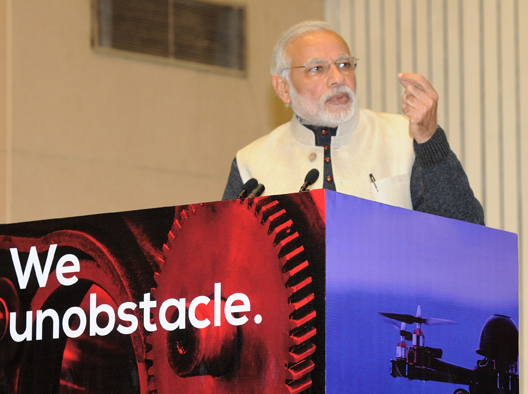
Prime Minister Narendra Modi on Saturday launched the “Start-Up India Action Plan” that aims to enable an eco-system to promote and nurse entrepreneurship across the country. What exactly is the plan and the details of the scheme?
So what exactly is Startup India?
Startup India in an action plan to develop an ecosystem to promote and nurture entrepreneurship across the country. This is based on an action plan aimed at promoting bank financing for start-up ventures to boost entrepreneurship and encourage startups with jobs creation. The campaign was first announced by Prime Minister Modi in his 15 August 2015 address from the Red Fort.
What is a startup?
A startup is an entity, private, partnership or limited liability partnership (LLP) firm that is headquartered in India, which was opened less than five years ago and have an annual turnover less than Rs25 crore. To be eligible for considering as startup, the entity should not be formed by splitting up or reconstruction and its turnover should not have crossed Rs25 crore during its existence.
What are the advantages?
Under the Scheme, no inspection would be carried out on start-ups for three years regarding labour laws. In addition, environment law compliance is required only post-self certification.
Are there financial benefits?
In patent costs, the startups can claim an 80% rebate. That means, if a startup applies for a patent, the government will fund the defence of the patent, and give rebate of 80% in the fees. The government will also pay fees of the facilitator for helping the startup obtain the patent. Faster patent registration and protection for Intellectual Property Rights (IPRs) is provided under the Scheme. Patent filing procedures to be simplified. Significant reduction in fees for filing Patents.
What are the advantages for startups regarding registration?
The government is launching a mobile app on 1 April 2016 and a portal that will allow companies to register in a day. In addition, there would be a single point of contact for Start-up India hub. In addition, there will be single window clearance for clearances, approvals, and registrations.
What is the government’s role in boosting start ups?
The Ministry of Human Resource Development (HRD) and the Department of Science and Technology have agreed to partner in an initiative to set up over 75 startup support hubs in the National Institutes of Technology (NITs), the Indian Institutes of Information Technology (IIITs), the Indian Institutes of Science Education and Research (IISERs) and National Institutes of Pharmaceutical Education and Research (NIPERs).
What are the special benefits for startups in public procurement?
Startups in the manufacturing sector are exempted from the criteria of prior ‘experience/ turnover’ without any relaxation in quality standards or technical parameters in public procurement (by government).
How much funding is available for this scheme?
Rs10,000-crore fund for new enterprises, equal opportunity in government procurement, a Rs500-crore credit guarantee scheme and easier exit norms. Japanese Softbank, which had already invested $2 billion in Indian startups, has pledged total investments of $10 billion.
What are benefits under the provision on Income Tax?
Under the Scheme, Income Tax exemption is available for first three years. However, the startup will be eligible for tax benefits only after obtaining certificate from the Inter-Ministerial Board, setup for this purpose.
Is there any exemption in capital gains tax?
Yes. If the money is invested in fund of funds recognised by the government, the investor can claim capital gains tax exemptions. In addition, existing capital gain tax exemption for investment in newly formed MSMEs by individuals shall be extended to all startups.
What is the eligibility for startups?
To become eligible as a startup and get a green signal from the Inter-Ministerial Board, the entity should be the one which aims to develop and commercialise, a new product or service or process or a significantly improved existing product or service or process that will create or add value for customers or workflow. Products, services or process, which do not have potential for commercialisation or is undifferentiated or have no or limited incremental value will not be considered under the Scheme. To be considered as eligible as startup the entity, should be supported by
a recommendation (with regard to innovative nature of business), in a format specified by DIPP, from an Incubator established in a post-graduate college in India an incubator, which is funded (in relation to the project) from GoI as part of any specified scheme to promote innovation a recommendation (with regard to innovative nature of business), in a format specified by DIPP, from an Incubator recognized by GoI or be funded by an Incubation Fund/ Angel Fund/ Private Equity Fund/ Accelerator/Angel Network duly registered with SEBI that endorses innovative nature of the business or be funded by GoI as part of any specified scheme to promote innovation or have a patent granted by the Indian Patent and Trademark Office in areas affiliated with the nature of business being promoted.
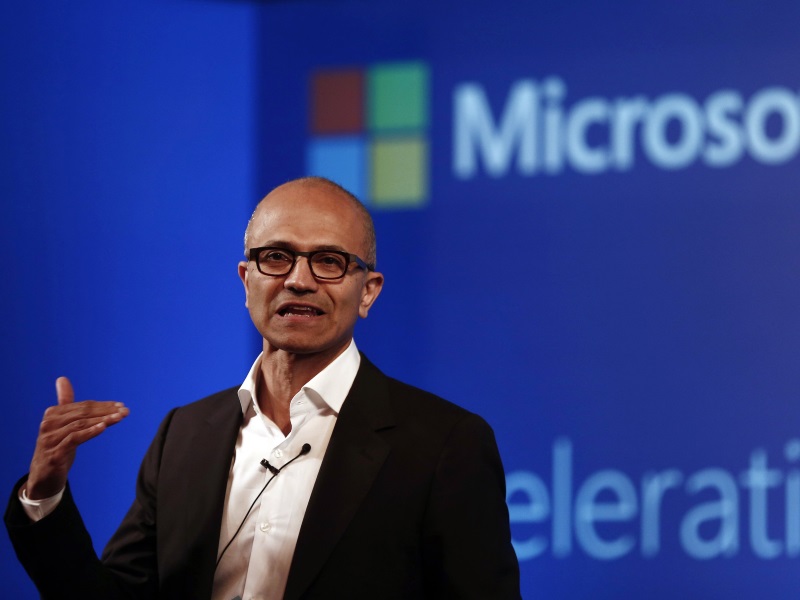
Microsoft is interested in working with entrepreneurs on building last mile technological connectivity with India’s rural areas, CEO Satya Nadella said on Monday.
Addressing a gathering at T-Hub, a technological incubator promoted by the Telangana government, Nadella advised the start-up community to learn from the failures.
“Whatever technology you use, like white space technology, it is important to get the last mile connectivity to rural areas. We are interested to work with entrepreneurs in that space. The idea should have marketability,” he said.
Microsoft recently launched a pilot project in Kenya to deliver low-cost, high-speed wireless broadband and create new opportunities for commerce, education, healthcare, and delivery of government services across the African country.
It is the first deployment of solar power-based stations together with TV white spaces, a technology partially developed by Microsoft Research, to deliver high-speed Internet access to areas currently lacking even basic electricity, Microsoft had said.
Nadella said people celebrate failures only when they learn lessons from them and correct mistakes.
“Failure plays an important role as it gives an opportunity to learn from it. Celebration of failure comes only when we learn lessons from it,” he was quoted as saying by a government official in an interactive session where media was not allowed.
Infosys CEO Vishal Sikka, Nasscom Chairman B V R Mohan Reddy and Dr Reddy’s Laboratories CEO G V Prasad were also present during Nadella’s visit at the T-Hub.
T-Hub is a technology incubator with collaborative efforts from Indian School of Business (ISB), International Institute of Information Technology (IIIT-Hyderabad) and NALSAR University of Law besides various other organisations.
An entrepreneur, who was present during the interactive session, said it was a great inspirational and thought provoking speech by Nadella who said concept, capability and culture are the mantra of success.
“When we asked about the focus of Microsoft, Nadella said they would focus more on product development rather than services,” he said, adding that entrepreneurs should come up with ideas which will have marketability.
A senior government official said Microsoft would help build a start-up ecosystem in Hyderabad.
A senior official had earlier said that Nadella was expected to unveil some government policies, like IT Policy, during his visit on Monday. However, it could not take place as the election code of conduct is in force in the state.
Nadella’s visit was kept a low profile affair as his tour was strictly personal.
Earlier in the morning, he met Andhra Pradesh Chief Minister N Chandrababu Naidu at the latter’s residence.


 Enterprisers.in